
Trigger Points Explained
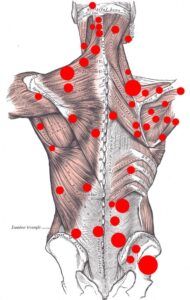
If you’ve ever felt a tight area of a muscle or a tender knot in your muscle that seems to send pain shooting elsewhere in your body, you’ve likely encountered a trigger point. These small but mighty spots are a common source of musculoskeletal pain, and understanding them is the first step toward lasting relief. I see trigger points every day in clients dealing with neck tension, shoulder pain, back pain, and more. Let’s break it down what trigger points are, why they form, and most importantly how we can effectively treat them.
What Are Trigger Points?
Trigger points are discrete, hyperirritable spots (often described as “knots”) located in taut bands of skeletal muscle or its fascia (the connective tissue surrounding the muscle). Pioneered by Dr. Janet Travell and Dr. David Simons in their seminal work Myofascial Pain and Dysfunction: The Trigger Point Manual, these points are focal areas where muscle fibers stay contracted, even at rest.
When pressed, a trigger point typically produces:
– Local tenderness at the site.
– A characteristic referred pain pattern: pain felt in a different area from the actual knot (e.g., a trigger point in your upper trapezius might refer pain to your temple, mimicking a headache).
– Sometimes a local twitch response (a visible or palpable muscle jump when the point is compressed).
– Restricted range of motion and muscle weakness in the affected area.
There are two main types:
– Active trigger points: Cause spontaneous pain and referred patterns, even without pressure.
– Latent trigger points: Only painful when pressed, but can still contribute to stiffness and dysfunction.
These aren’t just “tight muscles”, instead they involve physiological changes like reduced blood flow, buildup of inflammatory chemicals, and sensitized nerve endings.
What Causes Trigger Points?
Trigger points develop from a mix of factors that overload or irritate muscle tissue:
– Repetitive strain or overuse — Think desk work, poor posture, repetitive motions (e.g., typing, driving, or gym routines without balance).
– Acute trauma — A fall, whiplash, or sudden injury.
– Chronic stress — Emotional tension leads to muscle clenching (especially in the neck and shoulders).
– Poor ergonomics or biomechanics — Forward head posture, rounded shoulders, or imbalanced training (like over-focusing on pecs or lats, as we discussed in previous posts).
– Inactivity or de-conditioning — Sedentary lifestyles allow muscles to shorten and weaken.
– Other contributors — Sleep disturbances, nutritional deficiencies, or underlying conditions like fibromyalgia.
In short, anything that causes sustained muscle contraction or microtrauma can set the stage for trigger points to form.
How Trigger Points Are Treated:
The goal is to deactivate the trigger point, restore normal muscle length and function, and address underlying causes. Effective approaches include:
1. Dry Needling
A targeted technique where a thin, sterile filiform needle is inserted directly into the trigger point. This elicits a local twitch response, increases blood flow, reduces inflammatory mediators, and “resets” the muscle. Many clients feel immediate relief, with improved range of motion. It’s evidence-based for myofascial pain and often faster for stubborn knots than massage alone.
2. Manual Therapies
Massage, myofascial release, or ischemic compression (sustained pressure on the point) can help release knots and improve circulation.
3. Stretching and Corrective Exercise
Gentle, targeted stretches and strengthening to prevent recurrence—focusing on balanced posture and movement patterns.
4. Lifestyle Adjustments
Ergonomic setups, stress management (e.g., mindfulness), better sleep, and avoiding repetitive overload.
Most people see significant improvement with a combination of these, often in just a few sessions.
Ready to Release Your Trigger Points?
Trigger points don’t have to be a lifelong annoyance, they’re treatable! …and getting to the source can dramatically improve your comfort and mobility. Book a dry needling session and your muscles will thank you.
Have questions about a specific area of pain? Send a message, I’m here to help!
Schedule an appointment today:
Schedule Now