
Dry Needling vs Acupuncture for Neck Pain: A Santa Monica Specialist’s Guide
We’ve all been there, staring at a laptop or a phone for hours until your neck locks up into a stiff, painful mess. When neck pain becomes a daily headache, your muscles are essentially stuck in a constant, tight knot that stretching just won’t fix.
If you’re looking for real relief without relying on painkillers, you’ve probably heard of Acupuncture but maybe you haven’t heard of Dry Needling. Both use super-thin, sterile needles, but they work differently. For stubborn, mechanical neck pain, dry needling has a massive advantage because it goes straight after the root physical cause.
The Big Difference: Balancing Energy vs. Releasing Tight Knots
Traditional acupuncture is based on ancient practices focused on balancing your body’s overall energy flow (called Qi) and lowering stress. An acupuncturist might place needles in various spots across your body to help you relax and calm your nervous system.
Dry needling, on the other hand, is a modern Western medical approach focused strictly on your muscles and anatomy. Instead of working on energy pathways, dry needling identifies the physical source of your pain: myofascial trigger points, which most of us just call tight muscles or muscle knots.
Muscle tension locks up your neck and upper shoulders, it creates inflammation and restricted range of movement. Here is how the two approaches handle it:
- Traditional Acupuncture: A gentle, whole-body approach to calm your nerves and reduce stress.
- Clinical Dry Needling: A direct, physical hit to unlock the specific muscle knots causing your pain.
Why Dry Needling Unlocks Neck Pain Faster
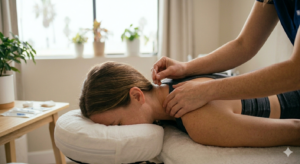 If your neck pain is caused by tight muscles and bad desk posture, dry needling offers some major shortcuts to feeling better:
- Immediate Physical Release: The needle goes directly into the tight knot, which triggers a quick, involuntary muscle twitch. This “local twitch response” is basically a reset button that forces the locked muscle to completely relax on the spot.
- Fast Relief for Postural Strain: Because it deals with the tight tissue directly, most people notice a massive improvement in how far they can turn their head right after a session.
- Reaches Deep Muscles: Massage and foam rollers are great, but they can’t reach the deep structural muscles protecting your spine. Dry needling lets a specialist pinpoint and release those deep, buried knots with exact precision.
| Treatment | Where It Focuses | How It Works | Best For |
|---|---|---|---|
| Dry Needling | Directly in the painful muscle knots | Triggers a muscle twitch to force immediate relaxation | Postural neck stiffness, stubborn knots, tension headaches |
| Traditional Acupuncture | General energy pathways (meridians) | Balances the body and calms the nervous system | Stress, generalized tension, or overall body wellness |
What It Feels Like at Our Santa Monica Practice
The biggest worry people have is the needles. But these aren’t the thick hypodermic needles used for blood tests, instead these are solid filaments that are incredibly thin, about the width of a single strand of hair, so sometimes you barely feel them being inserted.
During a session, we will check your neck and upper back to find the exact knots causing your stiffness. When the needle hits the tight spot, you’ll feel a brief twitch or an ache as the muscle reacts. After that twitch, the muscle releases over the next 24 hours, leaving you with a sense of lightness and better mobility.
Ready to Get Your Neck Moving Again?
If you want to unlock tight muscles and get back to your day without constant stiffness, dry needling is the most direct way to get there.
If you are in the Santa Monica or West Los Angeles area and want to get to the root of your neck pain, you can check our real-time availability and schedule a treatment online today.
Disclaimer: The information provided in this article is for educational purposes only and should not replace professional medical advice, diagnosis, or treatment. Always consult with a licensed healthcare professional regarding a medical condition.
