
How to Avoid Piriformis Syndrome and Gluteal Pain
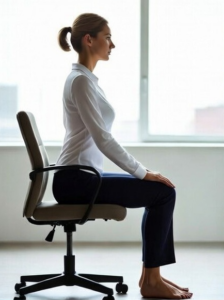
If you’re one of the many people who spend hours each day at a desk, driving, or lounging on the couch, you might have felt that nagging deep ache in your hips, a sharp twinge when you stand up, or even radiating discomfort down your leg. These symptoms often point to issues involving the piriformis muscle, a small but mighty deep gluteal muscle that can wreak havoc when it’s tight or irritated.
At my practice, we frequently see patients with piriformis-related pain, sometimes called “piriformis syndrome” or part of the broader “deep gluteal syndrome”. A major contributor? Poor sitting posture that places uneven pressure on the glutes and compresses nearby nerves, including the sciatic nerve (and occasionally others like the inferior gluteal or pudendal nerves in more complex cases). The good news? A small adjustment in how you sit, specifically, sitting directly on your “sit bones” can make a big difference in preventing and managing these issues.
What Are Your “Sit Bones”?
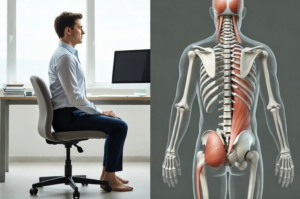
Your sit bones, technically called the “ischial tuberosities”, are the two bony prominences at the base of your pelvis. They’re designed to bear your weight when seated, much like chair legs support a table.
When you sit properly:
– Your weight rests evenly on these bones.
– Your pelvis stays in a neutral position.
– Your spine maintains its natural curves.
– Weight is only on the glute max and no other hip muscles.
This balanced position keeps the piriformis muscle (which runs from your sacrum to the top of your femur) at a healthier length and reduces unnecessary pressure.
How Poor Sitting Contributes to Piriformis Problems and Nerve Compression:
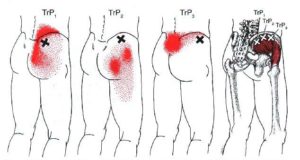 Slouching, tucking your pelvis under (posterior tilt), or perching forward puts the piriformis in a shortened, compressed state. Over time, this can lead to:
– Muscle tightness and trigger points in the piriformis.
– Direct pressure or irritation on the sciatic nerve, which runs close to (or sometimes through) the piriformis in many people. Classic piriformis syndrome symptoms include: buttock pain, leg tingling, or “sciatica-like” radiation.
– In deeper cases, compression of other gluteal nerves (e.g., inferior gluteal nerve affecting glute strength or pudendal nerve contributing to pelvic/perineal discomfort), part of deep gluteal syndrome.
Prolonged sitting on soft couches, uneven surfaces, or with crossed legs or a wallet in back pocket exacerbates this. The result? Inflammation, spasms, and that frustrating “pain when I sit too long” cycle.
The Fix: Sit on Your Sit Bones (Proper Posture Tips):
1. Find your sit bones – Sit on a firm chair. Gently rock side to side or forward/backward until you feel those two hard points under your buttocks. That’s your foundation.
 2. Sit tall – Lengthen your spine, roll your shoulders back slightly, and avoid slumping. Imagine a string pulling the top of your head upward. It is better not to use the back of the seat at all, but instead sit upright on the front of the seat using your “core” to keep good alignment.
3. Feet flat, hips & knees aligned – Keep feet on the floor (use a footrest if needed), thighs roughly parallel to the ground, and hips level or slightly higher than knees.
4. Support where needed – Add a small lumbar roll or cushion behind your lower back to maintain the natural curve. Avoid thick wallets or uneven seating.
5. Move often – Stand, walk, or stretch every 30–60 minutes. Prolonged static positions are the enemy, even with perfect posture.
This simple shift distributes weight properly, reduces direct pressure on the piriformis, and helps prevent nerve entrapment in the deep gluteal space.
How Dry Needling Can Help:
Sometimes bad sitting habits have been going on for a long time and therefore an “intervention” is needed. While posture changes are foundational, tight gluteal muscles with trigger points may need targeted release. That’s where dry needling shines… Dry needling involves inserting thin, sterile needles into those knotted areas of the piriformis and surrounding glutes. It triggers a local twitch response that releases tension, improves blood flow, and reduces inflammation, often providing faster relief than stretching or a change in habits alone. Many patients notice significant improvement in sitting tolerance and nerve-related symptoms after just a few sessions, especially when combined with posture education and home exercises.
Schedule a consultation at our Santa Monica practice for a personalized assessment, dry needling treatment if appropriate, and tailored advice to keep you pain free.
